Turnham Green upholstery cleaning tips for W4 flats
If you live in a W4 flat, you already know the small stuff matters. A coffee spill on the sofa, a dusty armchair by the window, a dining chair that looks a bit tired by Friday evening... it all adds up fast. This guide to Turnham Green upholstery cleaning tips for W4 flats is built for real homes, real fabrics, and real constraints like limited drying space, shared hallways, and not wanting the whole flat to smell damp for two days.
The good news? Upholstery is usually easier to maintain than people think, as long as you work with the fabric rather than against it. In the sections below, you will find practical cleaning methods, safety checks, common mistakes, and a simple process for getting better results without making a mess of the room. If you want to go further than DIY spot cleaning, it can also help to understand the broader service options, such as professional upholstery cleaning and related sofa cleaning support.
Table of Contents
- Why Turnham Green upholstery cleaning tips for W4 flats Matters
- How Turnham Green upholstery cleaning tips for W4 flats Works
- Key Benefits and Practical Advantages
- Who This Is For and When It Makes Sense
- Step-by-Step Guidance
- Expert Tips for Better Results
- Common Mistakes to Avoid
- Tools, Resources and Recommendations
- Law, Compliance, Standards, or Best Practice
- Options, Methods, or Comparison Table
- Case Study or Real-World Example
- Practical Checklist
- Conclusion
- Frequently Asked Questions
Why Turnham Green upholstery cleaning tips for W4 flats Matters
Flats in and around Turnham Green often come with the same upholstery headaches: compact living areas, less storage for cleaning kit, and fabrics that get daily use because the sofa does everything. Work-from-home lunch, takeaway, guests, pet paws, a wet umbrella tossed on the armrest. It's all normal. And because space is tighter, one stain can dominate the whole room visually.
That is why upholstery cleaning is not just about looks. It helps with comfort, hygiene, and the lifespan of the furniture you have already paid good money for. In a flat, you usually want methods that are controlled, low-odour, and quick to dry. Nobody wants the bedroom turned into a laundry line jungle, honestly.
There is also a practical local angle. W4 flats often sit in busy households where time is short and room layouts are awkward. A sensible routine keeps the fabric fresher between deeper cleans, which means fewer panic moments when friends say they are "five minutes away" and the armchair is still showing last night's biscuit crumbs. We have all been there.
Expert summary: the best upholstery cleaning approach for a Turnham Green flat is usually a gentle, fabric-aware routine: vacuum well, spot treat carefully, test products first, dry fast, and know when a professional clean is the safer option.
How Turnham Green upholstery cleaning tips for W4 flats Works
Good upholstery care starts with identifying the fabric. That sounds boring, but it makes a huge difference. A cotton-blend chair, a synthetic sofa, and a velvet ottoman do not want the same treatment. Some fabrics tolerate light moisture. Others mark easily, stretch, or lose their texture if you scrub them. If you are unsure, check the care label or do a hidden patch test first.
The basic cleaning process is simple: remove loose dust, treat stains from the outside in, use as little liquid as possible, and dry the area quickly and evenly. In flat living, that last part matters a lot. Trapped moisture can leave water rings, dull patches, or a stale smell that lingers in a closed room.
For many residents, the smartest approach is a combination of routine maintenance and occasional deeper work. Routine maintenance is the quick vacuum, the spot dab, and the fabric refresh. Deeper work may involve a dedicated cleaner or a service like deep cleaning when a sofa has absorbed months of everyday use, cooking smells, or traffic dust from open windows.
It also helps to think about your flat as a small ecosystem. Drying airflow, radiator use, window position, and even the season change results. On a damp February morning, a cleaning job that would dry in a few hours during summer may need a full day. That's not failure. It's just the reality of London flats.
Key Benefits and Practical Advantages
When upholstery is cleaned properly, the payoff is bigger than most people expect. Here are the main advantages W4 flat residents tend to notice:
- Better first impressions: tidy upholstery makes the whole room feel more cared for, even if the rest of the flat is lived-in.
- Longer fabric life: dirt particles act like fine grit. Remove them regularly and the fibres last longer.
- Less odour build-up: fabric traps cooking smells, pet odours, and damp air surprisingly quickly in smaller homes.
- Improved comfort: clean cushions feel fresher, softer, and more inviting to use.
- Lower risk of staining: fresh spills are much easier to remove than old, heat-set marks.
- More practical flat maintenance: a cleaner sofa or chair can make the entire room easier to keep on top of.
There is a quiet confidence that comes from knowing your soft furnishings are under control. It sounds small, but it really changes how a flat feels when you sit down at the end of the day.
And if your furniture is part of a wider move-out or refresh, upholstery care can sit alongside other services such as end of tenancy cleaning or a general one-off cleaning visit. Not always necessary, but useful when life has piled up a bit.
Who This Is For and When It Makes Sense
This guide is for anyone living in a W4 flat who wants better-looking, better-lasting upholstery without overcomplicating the job. That includes renters, homeowners, landlords, and busy households with children or pets. If you have a small sofa that gets used every day, you are squarely in the target group.
It also makes sense if you notice any of the following:
- the fabric looks dull even after vacuuming
- there are drink marks, hand grease, or pet patches on armrests
- cushions smell slightly stale after a few weeks of use
- the flat is compact and stains feel more noticeable than they would in a larger house
- you are preparing for guests, a photo listing, or a tenancy check-out
There are times when a professional clean is the safer choice. For example, if the label warns against water, if the stain is large, if the fabric is delicate, or if the furniture is expensive enough to make you nervous. To be fair, being cautious is not overreacting. It is sensible.
If you need regular help around the home rather than just a one-off fabric refresh, broader domestic cleaning support can make maintenance much easier to stay on top of.
Step-by-Step Guidance
Here is a practical process you can follow in a flat without turning the room upside down.
- Check the care label first. Look for codes or instructions about water, solvents, or dry cleaning. If there is no label, test carefully in a hidden spot.
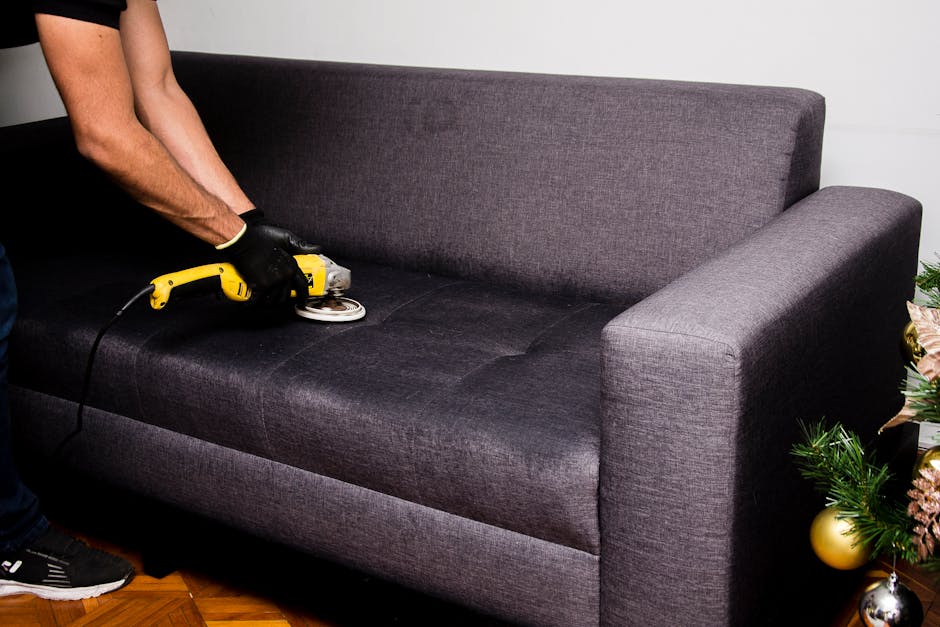
- Vacuum slowly and thoroughly. Use the upholstery attachment and go over seams, piping, seat creases, and under cushions. Dust hides in these little folds like it pays rent.
- Remove loose marks before adding moisture. Blot crumbs, dry mud, or surface debris first. Never rub a fresh spill as that just pushes it deeper.
- Mix a mild cleaning solution. A small amount of gentle fabric-safe cleaner in water is usually enough for synthetic upholstery. Less is more here.
- Blot, do not soak. Use a clean cloth and work from the outside of the stain inward. That helps stop the mark spreading.
- Lift residue with a second damp cloth. This keeps cleaning product from sitting in the fabric and attracting more dirt later.
- Dry fast. Open windows if weather allows, create airflow, and avoid sitting on the area until it is fully dry.
- Brush the pile if needed. On some fabrics, a soft brush helps restore texture after drying. Gentle, not aggressive.
If the stain is still visible after one pass, pause. Let the area dry and reassess. Sometimes a second gentle treatment works better than one heavy-handed attempt. There is a temptation to keep going, but that is often where a small stain becomes a bigger job.
For larger furniture sets or heavily used flats, many people choose to combine this routine with sofa cleaning or broader home cleaners support so the whole room feels reset rather than patched up.
Expert Tips for Better Results
These are the little details that tend to separate a decent result from a really good one.
- Work in sections. In a flat, you usually do not have room for everything to be "in process" at once. Keep it controlled.
- Use white cloths. Coloured cloths can transfer dye, especially with moisture. Not worth the risk.
- Blot with pressure, not speed. Slow, steady pressure removes more residue than frantic rubbing.
- Ventilate twice. Open a window during the clean and again after drying if the room still feels damp.
- Clean armrests and headrests more often. Those spots take the most body oils and grime, so they age fastest.
- Rotate loose cushions. It evens wear and helps a sofa look balanced for longer.
- Use a lint roller between vacuums. Handy for pet hair, blanket fibres, and the weird fluff that seems to appear out of nowhere.
One small but useful trick: if a mark is greasy, you may need to lift the oil first rather than adding more water straight away. Water can make some oily stains spread. That is the kind of annoying detail nobody tells you until you have already made the ring bigger.
And if the flat has just had decorating or building work, fabric can pick up fine dust very quickly. In those cases, pairing upholstery care with after builders cleaning can make a real difference to the feel of the whole space.
Common Mistakes to Avoid
Most upholstery damage comes from a few repeat mistakes. Avoid these and you are already ahead of the game.
- Over-wetting the fabric. Too much liquid can leave rings, slow drying, and even shrinkage on some materials.
- Scrubbing hard. This can rough up the pile, distort the weave, or spread the stain.
- Using the wrong product. Bleach, strong alkaline cleaners, and random household sprays can do more harm than good.
- Skipping a patch test. A hidden test takes minutes and can save an expensive repair.
- Ignoring the underside or seams. Dust builds in the spots you do not see, then sneaks back up later.
- Sitting on damp upholstery. It flattens fibres and can leave a lingering musty smell.
- Cleaning only the stain, not the panel. Local cleaning can sometimes leave a tide line; blending the area helps.
Truth be told, most of the "my sofa got worse after I cleaned it" stories come from rushing. People mean well, they really do, but upholstery has a few rules and it likes to be treated kindly.
Tools, Resources and Recommendations
You do not need a huge kit. In a W4 flat, a compact and sensible set-up is often best.
- Vacuum with upholstery attachment: essential for regular maintenance and dust removal.
- Soft-bristled brush: useful for lifting surface dirt and refreshing texture.
- White microfibre cloths: good for blotting and controlled cleaning.
- Spray bottle: helps apply small amounts of solution without soaking the fabric.
- Mild fabric-safe cleaner: choose something suitable for your upholstery type.
- Dry towels: for pressing out moisture quickly.
- Fan or open window: simple but very effective for faster drying.
If you are comparing help options, it is worth looking at the broader service page for a reliable cleaning company rather than focusing only on the lowest price. Good equipment, careful handling, and proper insurance can matter more than a small saving.
For clients who want a more complete refresh beyond upholstery, combining the job with carpet cleaning or rug cleaning can make the flat feel much cleaner overall. Little details, big effect.
Law, Compliance, Standards, or Best Practice
Upholstery cleaning in flats is usually a practical household task, not a heavily regulated one, but best practice still matters. In the UK, it is sensible to follow manufacturer care instructions, use products as directed, and avoid methods that could damage the item or create safety issues in a shared building.
If you are cleaning as a tenant, keep in mind that you are generally expected to return the property in a reasonable condition, allowing for fair wear and tear. That does not mean everything must look brand new. It does mean stains, odours, and avoidable damage can become issues at check-out. So it pays to stay ahead of them.
For professional work, safety, insurance, and clear terms are important. A reputable provider should be able to explain how they work, what happens if a fabric is unsuitable for wet cleaning, and what care is taken to protect floors, walls, and surrounding furniture. If you want to check the company's policies before booking, pages such as insurance and safety, health and safety, and terms and conditions are useful starting points.
That is really the practical standard to look for: care, clarity, and sensible handling. Nothing flashy. Just proper work.
Options, Methods, or Comparison Table
Different upholstery problems call for different methods. Here is a straightforward comparison to help you choose.
| Method | Best for | Pros | Watch-outs |
|---|---|---|---|
| Dry vacuum maintenance | Weekly dust, crumbs, pet hair | Fast, safe, no drying time | Won't remove embedded stains |
| Gentle spot cleaning | Fresh spills, small marks | Low cost, quick, targeted | Can create rings if overused |
| Steam or hot water extraction | Heavier soil, deep-set dirt, whole-sofa refresh | Very thorough when fabric allows it | Needs correct fabric choice and drying space |
| Professional upholstery cleaning | Delicate fabrics, large sofas, difficult stains | Expert assessment, better equipment, less risk | Costs more than DIY |
For many flats, the sweet spot is a mix: routine vacuuming, careful spot treatment, and a professional clean when the furniture starts looking flat or tired. That approach is usually more cost-effective than waiting until the whole sofa needs rescuing.
Case Study or Real-World Example
Imagine a typical W4 living room: a small two-seater sofa, one accent chair, and a rug under the coffee table. After a few months, the sofa arms look slightly darker, the seat cushions have biscuit crumbs hidden in the seams, and there is a pale tea mark near the front edge. Nothing dramatic. Just everyday life, really.
The first pass is a slow vacuum with the attachment. The second is a tiny amount of gentle solution on a white cloth, dabbed on the tea mark rather than poured. The third step is airflow: window open for a while, curtains pulled back, and no one sits on the sofa for an hour or two. The result is not a miracle, but the room looks brighter and smells cleaner. More importantly, the fabric looks cared for rather than scrubbed.
If that sofa had been velvet or a water-sensitive blend, the cleaner would have taken a different route. That is the point. Real upholstery cleaning is not about using the strongest product. It is about reading the fabric and choosing the least risky method that still gets the job done.
When people call for help after trying every household spray in the cupboard, the conversation usually starts with a gentle sigh and a cup of tea. Then the real work begins. Still, a lot can be saved.
Practical Checklist
Use this simple checklist before you clean upholstered furniture in your flat:
- Check the care label or fabric instructions
- Test any cleaner in a hidden spot
- Vacuum seams, cushions, and armrests
- Blot spills before adding liquid
- Use a small amount of cleaner only
- Work from the outside of the stain inward
- Avoid over-wetting the fabric
- Dry the area quickly with airflow
- Brush the pile gently if needed
- Call in professional help for delicate or valuable items
Quick reminder: if the mark is old, large, or mysterious, do not keep attacking it with different products. That usually makes the situation more complicated. Step back, assess, then decide.
Get a free quote today and see how much you can save.
Conclusion
Upholstery cleaning in Turnham Green flats does not need to be fussy. It just needs to be thoughtful. Vacuum regularly, treat stains gently, respect the fabric, and keep drying times in mind because W4 living spaces do not always forgive excess moisture. That small bit of care goes a long way.
If you remember only one thing, make it this: the safest clean is usually the one that works with the material, not against it. That is true whether you are freshening a weekend sofa, preparing for visitors, or trying to save a favourite chair that has clearly seen a few too many cups of tea.
And if your flat needs more than a quick tidy-up, there is no shame in getting expert help. Sometimes the kindest thing you can do for your home is to stop wrestling with the stain and let someone who does this every day take over. Simple as that.
Fresh upholstery has a way of making a small flat feel calmer, lighter, and more lived-in in the best possible sense.
Frequently Asked Questions
How often should upholstery be cleaned in a W4 flat?
For most flats, light vacuuming every week or two and spot cleaning as needed is a sensible routine. A deeper clean is often needed less often, but high-use sofas, pet homes, or busy family spaces may need attention sooner.
Can I use the same cleaner on every fabric?
No, and that is where a lot of damage starts. Velvet, cotton, linen blends, synthetics, and leather all behave differently. Always check the care label and test first in a hidden area.
What is the safest way to remove a fresh spill from a sofa?
Blot it with a clean white cloth straight away. Do not rub. If the stain remains, use a very small amount of suitable cleaner and keep moisture to a minimum.
Why does upholstery sometimes get a water ring after cleaning?
That usually happens when too much liquid is applied or the area dries unevenly. Working in a controlled way, blending the cleaned section, and drying it properly helps reduce that risk.
Is steam cleaning safe for all upholstery?
No. Steam or hot water extraction can be excellent on the right fabric, but it is not suitable for every material. Delicate or water-sensitive fabrics may be damaged, so a fabric check comes first.
What should I do if my sofa smells damp after cleaning?
Improve airflow immediately. Open windows if possible, use a fan, and avoid using the furniture until it is fully dry. If the smell lingers, too much moisture may have been used and a professional assessment could help.
Can upholstery cleaning help with pet odours?
Yes, to a point. Regular vacuuming and proper cleaning can reduce odours trapped in fabric, but deep pet smells may need more thorough treatment. The key is removing the cause, not just masking it.
How do I know when to hire a professional cleaner?
If the fabric is delicate, the stain is large, the item is expensive, or you are unsure about the cleaning code, professional help is usually the safer route. It saves a lot of guesswork, and sometimes guesswork is the expensive part.
Can upholstery cleaning be done in a small flat without making a mess?
Yes. A compact, well-planned clean can work very well in a flat. Use small amounts of product, keep towels handy, open windows, and clean one area at a time so the room stays usable.
Does regular vacuuming really make a difference?
Absolutely. Dust and grit settle into the fibres and seams, which dulls the fabric over time. Regular vacuuming keeps the surface fresher and helps prevent wear from building up unnoticed.
Will upholstery cleaning remove old stains completely?
Not always. Some stains have been there too long, have set into the fibres, or have reacted with the fabric. A good clean can often improve them a lot, but it is better to be honest about what is realistic.
Are professional upholstery cleaning services worth it for a rented flat?
Often, yes, especially if the furniture is part of the property or the flat needs a tidy, well-kept finish for check-out. It can also save time and reduce the risk of accidental damage from DIY mistakes.
Where can I learn more about related cleaning services?
You can look at services such as carpet cleaning, rug cleaning, and window cleaning if you want the rest of the flat to feel as refreshed as the upholstery.